Home › Industrial and Heavy-Duty Asphalt Paving
Handle heavy traffic and loads with industrial asphalt paving in Durham, NC. We design and build pavements for truck yards, loading docks, warehouses, and manufacturing sites. Thicker sections, stronger bases, and reinforced details handle constant use and tight turning. Our team tailors designs to your operations and future expansion plans.
Precision Asphalt Durham provides professional industrial asphalt paving throughout Durham, NC, North Carolina and the surrounding area. Our licensed, insured crew delivers safe, clean, on-time work with a free estimate before anything begins. Call (984) 206-3947 or request your free quote.
Industrial Asphalt Paving Tailored to Durham’s Workloads
If you operate a plant, trucking yard, or industrial facility in Durham, your pavement is not just a driveway. It is equipment that has to carry forklifts, loaded trailers, delivery trucks, and sometimes constant 24/7 traffic. At Precision Asphalt Durham, our industrial asphalt paving is built around the specific weight, turning patterns, and drainage needs of your site, not a generic parking lot template.
Industrial asphalt paving starts with understanding your operations. We look at what is driving on the surface (axle loads and tire types), how often trucks come and go, and where they turn, back in, or stack up. In Durham we see a lot of distribution yards where trucks sit in the same ruts while waiting to dock. Those spots need heavier-duty designs and thicker asphalt than the rest of the lot.
For most heavy-duty applications we approach the project as a system: subgrade (soil), stone base, binder course, and surface course. The subgrade is tested with proof rolling so we can see where the soil pumps or flexes under a loaded truck. Soft pockets are undercut and replaced with compacted stone, sometimes with geotextile fabric if the soil holds water. Skipping this step is one of the biggest reasons industrial pavements fail early.
On top of the prepared subgrade we install a dense, well-compacted ABC stone base, usually 6 to 10 inches thick for industrial work in the Triangle. From there we design one or more asphalt lifts using mixes that hold up to high loads and summer heat. Instead of a single thin layer, we typically use a thicker binder course for strength and a stable surface course for traction and fuel resistance.
How We Design Heavy-Duty Asphalt for Long-Term Loads
The asphalt mix and thickness that work for a retail parking lot will not survive loaded dump trucks or yard spotters. Precision Asphalt Durham uses heavy-duty mix designs and thicknesses based on the actual use of the pavement and the soil conditions we find on site.
For most industrial asphalt paving in Durham we specify a high-stability binder course, often 2 to 3 inches thick, under a 1.5 to 2 inch surface course. In truck lanes, loading docks, and dumpster pads, we frequently increase thickness, add an extra binder lift, or switch to a stiffer mix with a higher stone content. The goal is to keep the asphalt from shoving, rutting, or cracking under slow, tight turning movements.
We also adjust design based on your drainage and site layout. In parts of Durham where heavy summer thunderstorms are common, standing water is one of the fastest ways to destroy a high-traffic pavement. During design we set slopes, curbs, and drain locations so that water leaves your pavement quickly and does not sit along wheel paths. For older sites with existing drainage problems we can incorporate additional inlets, valley gutters, or regrading into the paving project.
If you have specialty needs, such as frequent steel-tracked equipment, chemical exposure, or very high forklift traffic, we may recommend thicker sections, alternate surface mixes, or a combination of asphalt and reinforced concrete in the highest stress zones. We walk you through those options with clear pros, cons, and cost impacts so you know exactly why each area is designed the way it is.
Step-by-Step: Our Industrial Paving Process in Durham
When Precision Asphalt Durham tackles an industrial or heavy-duty asphalt paving job, we follow a clear process that keeps your operation moving and minimizes surprises.
1. Site visit and load assessment. We walk the site with you, identify truck routes, dock areas, storage yards, and any future expansion you are planning. We look for existing failures like potholes, alligator cracking, and ponding so we can understand what went wrong before and prevent a repeat.
2. Coring and pavement evaluation (for overlays or reconstructions). On existing pavements we often take cores to see the depths of the current asphalt and stone base. This tells us whether we can overlay, need partial-depth repairs, or should mill out and start over. Many Durham industrial lots were built light 20 or 30 years ago and are now handling more and heavier trucks. Cores help us see where the weak links are.
3. Subgrade repair and base installation. We remove unsuitable material, compact the subgrade, then install a crushed stone base in controlled lifts. Every lift is mechanically compacted and checked. In areas with poor drainage or clay soils we may use stabilization fabrics or thicker stone to create a stronger platform.
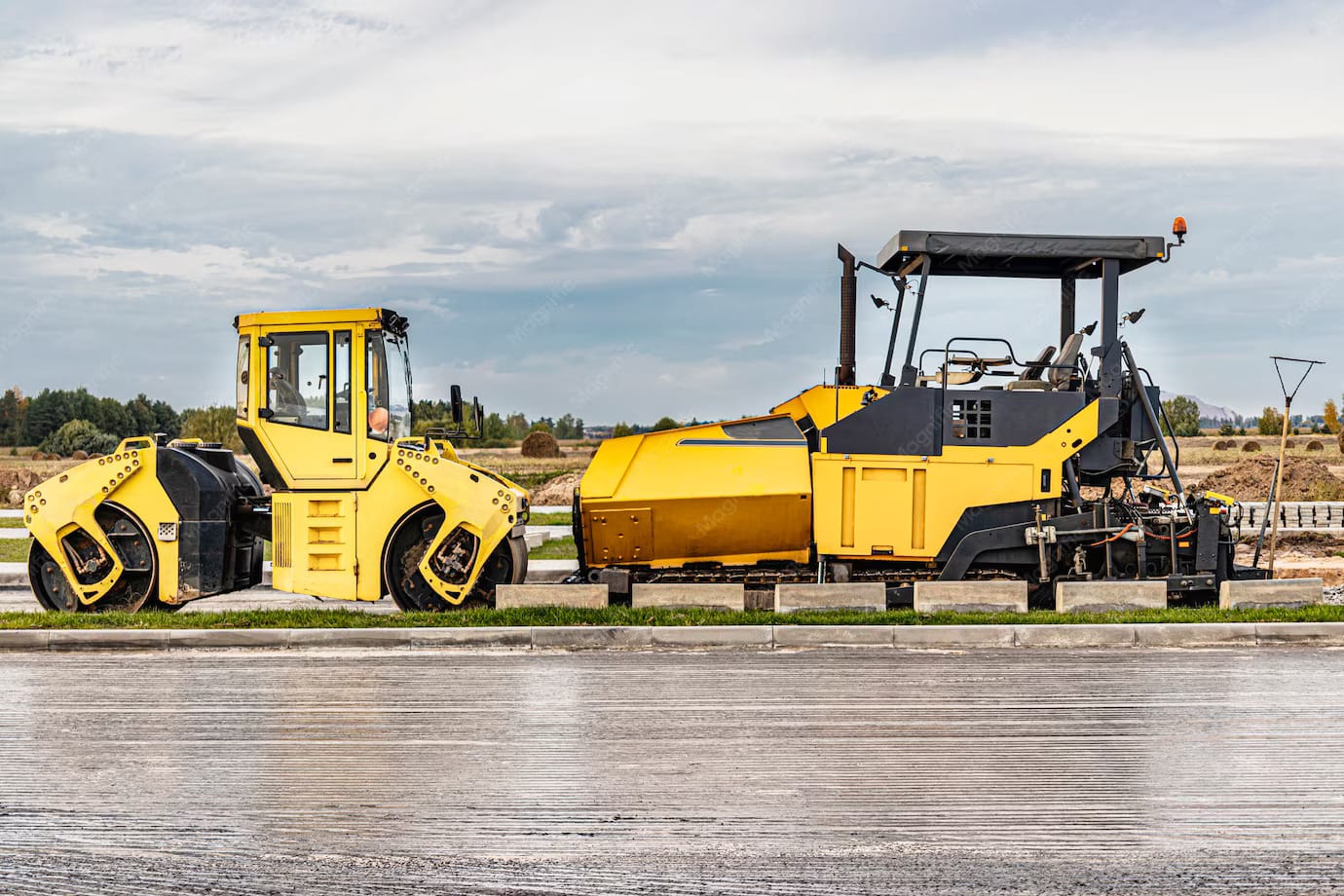
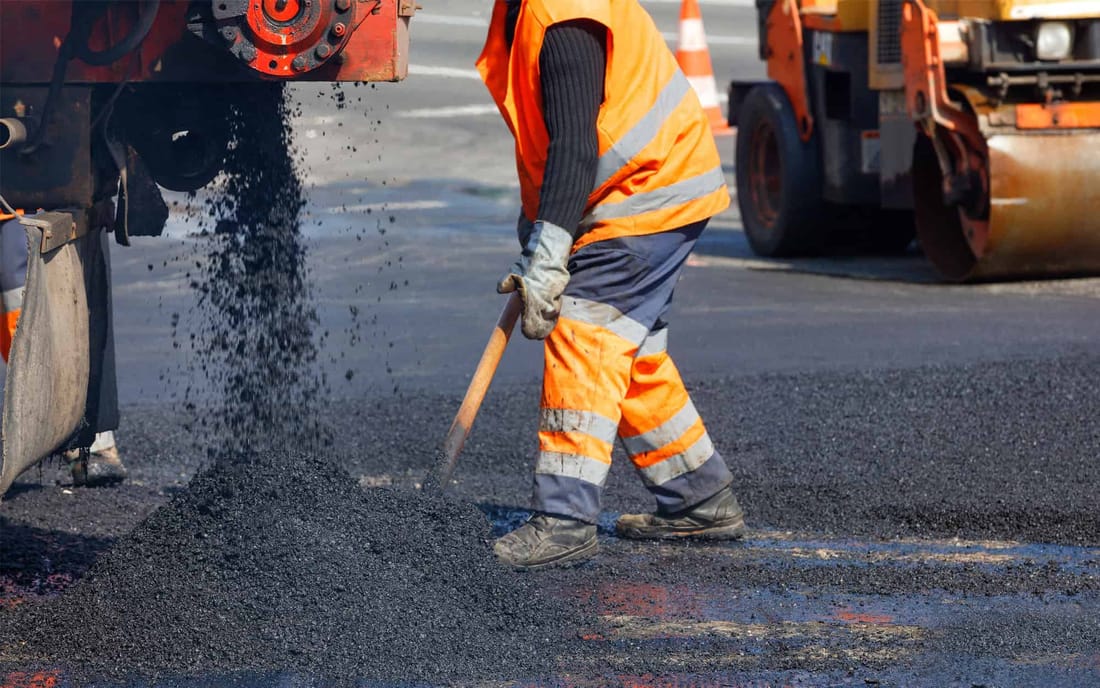
4. Asphalt placement in multiple lifts. We place binder and surface courses with a paver whenever access allows, which provides a smoother and more uniform mat than skid or hand placement. Joints are staggered and carefully compacted so trucks are not running along longitudinal seams that can separate over time. For tight corners around docks and in small loading areas we combine machine paving with detailed hand work to ensure water still flows where it should.
5. Striping, signage, and phasing. Once the asphalt has cooled we add striping that fits your operation: truck-only lanes, trailer storage lines, numbered dock bays, and clear fire lanes. For active sites we phase the project so you always have a way in and out. We are used to working around shift changes at local distribution centers and plants, and we coordinate scheduling so downtime is limited to what you truly need for compaction and cooling.
What Drives Cost for Heavy-Duty Asphalt Paving in Durham
Industrial asphalt paving is a bigger investment than light-duty work, and understanding the cost drivers helps you compare quotes fairly. Precision Asphalt Durham breaks this down into a few main categories.
Thickness and section design. Heavier-duty sections with multiple asphalt lifts and thicker stone bases cost more up front, but they dramatically reduce long-term patching and downtime. If one contractor is quoting 3 inches total and another is quoting 5 to 7 inches total, those are not comparable jobs. We always show you our proposed section thicknesses by area so you know what you are paying for.
Existing conditions. Soft subgrade, unstable fill, old asphalt that is too thin to overlay, and poor drainage all add cost. In parts of Durham that were developed in phases, we often find variable soil and patchwork bases under the pavement. We factor realistic repair allowances into our proposals so you are not surprised later by a pile of change orders.
Access and phasing. If we have to work nights, weekends, or in many small phases to keep your plant open, production is slower and unit costs go up. We look for ways to combine phases or re-route temporary traffic to control this. Many facility managers choose a blend of off-hours and normal hours work so they can save money without shutting down.
Materials and mix type. Higher performance mixes or areas that require a combination of asphalt and structural concrete will carry higher line-item costs but often lower lifecycle cost. We will point out which parts of your site truly need the premium approach and which can perform well with a more standard heavy-duty design so your budget is used where it matters most.
Common Industrial Pavement Problems and How We Prevent Them
A lot of the calls Precision Asphalt Durham gets from local plants and distribution centers start with the same complaints: rutting in truck lanes, breaking and pumping at docks, and water sitting in the middle of the yard. Most of these failures are not random. They come from specific design or construction shortcuts that we know how to avoid.
Rutting and shoving in wheel paths usually means the asphalt was too thin, the mix was too soft, or the base was not properly compacted. Our heavy-duty designs use thicker, stiffer binder courses, higher stone content mixes where needed, and strict compaction standards. We focus special attention on slow-traffic areas where trucks turn or brake because that is where shoving shows up first.
Alligator cracking and potholes near loading docks and dumpster pads often point to a weak base or water infiltration. In those areas we commonly cut out the failed spots, rebuild the base with compacted stone, and, when needed, add reinforcing fabric or a concrete approach slab right at the dock face. For new work, we design extra thickness and reinforcement in those high-stress zones from day one.
Drainage issues are a big concern around Durham, especially on flatter industrial sites. Even a small low spot can hold water for days after a storm, which accelerates cracking and creates slip hazards for forklifts and pedestrians. During layout we purposely slope pavements toward inlets and away from building foundations, and we check grades with laser equipment as we build. When we overlay an existing lot, we look at where water sits today and adjust our milling and paving plan to eliminate the worst ponds.
If you already have an industrial pavement with problems, we can walk it with you, map failures, and prioritize repairs that will actually extend life instead of just chasing potholes. Whether you are planning new construction, an expansion, or a heavy-duty overlay, our goal is to give you a clear plan that matches how your facility really operates, so your pavement supports your business instead of slowing it down.