Home › Asphalt Pathways, Sidewalks, and Trails
Create welcoming routes around your property with asphalt pathways, sidewalks, and trails in Durham, NC. We pave multi use paths for parks, schools, campuses, and communities. Our designs balance accessibility, drainage, and aesthetics. Provide smooth connections for walkers, cyclists, and joggers with low maintenance asphalt surfaces.
Precision Asphalt Durham provides professional asphalt pathway paving throughout Durham, NC, North Carolina and the surrounding area. Our licensed, insured crew delivers safe, clean, on-time work with a free estimate before anything begins. Call (984) 206-3947 or request your free quote.
Durham-focused asphalt pathway paving for homes, parks, and campuses
Asphalt pathways, sidewalks, and trails in Durham have to handle a mix of everyday foot traffic, strollers, bikes, and occasional service vehicles, plus our humid summers and frequent freeze-thaw cycles. Precision Asphalt Durham designs and builds paths that match how your property is actually used, whether it is a neighborhood cut-through path, a church sidewalk loop, a greenway-style trail, or a connector through an apartment complex.
We start by walking the route with you. On older Durham properties like 1950s ranch neighborhoods near Duke or 1990s subdivisions in South Durham, existing grades, tree roots, and utilities usually dictate alignment. We look at where water currently flows, where people already walk, and where ADA access is required. From there, we propose a path width, thickness, and edge treatment that fits your use and budget instead of trying to force a one-size layout.
Precision Asphalt Durham focuses on function first. For example, a 4 foot backyard walkway that only sees foot traffic can be built differently than an 8 foot multi-use trail behind a townhome community that carries golf carts and maintenance equipment. We explain those differences in plain language before any work starts so you understand what you are paying for and what lifespan to expect.
How we build durable asphalt pathways, sidewalks, and trails
A long-lasting asphalt pathway or trail is more about the base than the blacktop you see. Precision Asphalt Durham follows a step-by-step process that fits Piedmont clay soils and local code requirements.
First, we handle layout and marking. We call 811 to locate utilities, then stake and paint the exact path alignment and width. For curved trails in HOA common areas or municipal parks, we fine-tune curves to avoid major trees and to keep slopes comfortable for walking and wheelchairs.
Next is excavation. For most pathways and sidewalks we remove 6 to 10 inches of soil, more if the area has soft or organic material. In parts of Durham with dense red clay subgrade, we often scarify and compact the subgrade instead of over-excavating, which can save cost without sacrificing performance. If we find unstable soil, we may undercut and bring in better fill or recommend a geotextile fabric separator.
We then install the stone base, typically a compacted ABC stone (crushed aggregate) in one or two lifts. For light-use walkways, 4 inches of compacted stone is often adequate. For multi-use trails that must handle golf carts, UTVs, or maintenance trucks, we usually recommend 6 inches or more. Every lift is compacted with a plate tamper or roller to reach a density that will not settle.
After the base is proof-rolled and approved, we pave with a fine-graded asphalt mix suitable for pedestrian use. Thickness is typically 2 to 3 inches after compaction, depending on load and expected lifespan. Edges are compacted and neatly trimmed, and where needed we add topsoil and seed or gravel shoulders to prevent edge cracking and washouts.
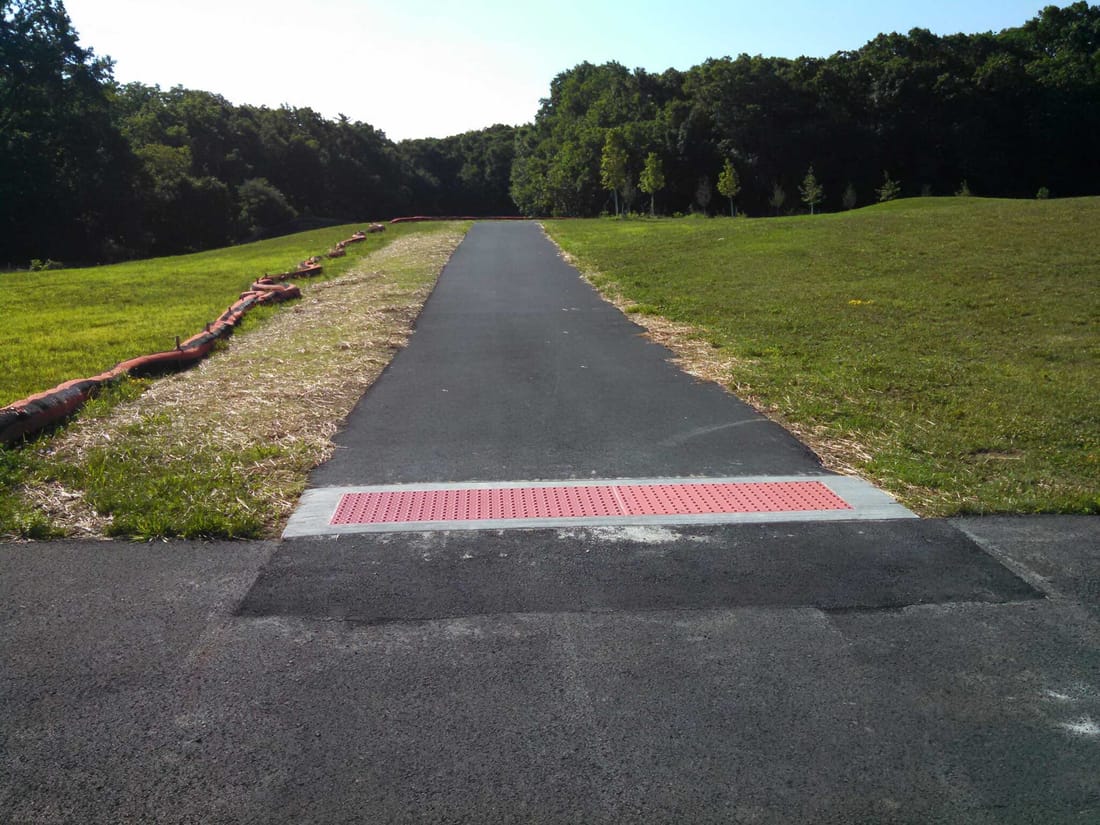
Finally, we finish with cleanup, transitions, and any markings. This might include sawcutting existing concrete to tie in flush, installing detectable warning domes at street crossings, or striping centerlines or lane markings on shared-use trails where required by the property owner or municipality.
Design options: widths, layouts, and edge treatments that fit your site
Usable pathways are not just about blacktop thickness. Precision Asphalt Durham helps you make sensible design choices that work in tight yards, steep driveways, and shared outdoor spaces.
For width, residential walkways in Durham are commonly 3 to 5 feet, enough room for two people to walk side by side or for a wheelchair to pass. HOA and apartment complex paths usually start at 5 feet and widen to 8 to 10 feet where bikes or golf carts are expected. On school campuses or church grounds, we often build wider intersections or small paved nodes where people naturally gather so foot traffic does not damage adjacent turf.
Alignment and grade matter just as much. We adjust slopes to shed water without creating slick surfaces or tripping hazards. In older Durham neighborhoods with rolling yards, we may suggest short ramps or landings instead of one steep run, especially when ADA access is needed from parking lots to building entrances. Where roots are a concern, we can adjust the path several feet to one side or selectively root prune in coordination with an arborist.
Side treatments protect your investment. You can leave a clean asphalt edge, install flush concrete or steel edging, or use gravel shoulders to help drainage and discourage cracking at the sides. In shaded, leaf-prone areas, we may recommend a slight crown or cross-slope so water does not stand and promote algae growth, which makes surfaces slick in winter.
If your pathway needs lighting, railings, or fence posts, we plan those penetrations before paving. Conduits or post sleeves can be set during base preparation so you are not coring through fresh asphalt later, which reduces the risk of premature cracking around attachments.
Cost drivers for asphalt pathway paving in Durham
Customers often ask what really controls cost on a pathway, sidewalk, or trail project. Precision Asphalt Durham is upfront about the main factors so you can decide where to invest and where to save.
Length and width are the most obvious drivers, since asphalt and stone are priced largely by ton. However, site conditions often have more impact than people expect. Working in tight downtown Durham backyards with limited machine access usually costs more per foot than building a straight trail behind a newer subdivision, because excavation and material handling take more time and often require smaller equipment.
Subgrade and drainage also matter. If your path crosses low spots that stay wet after rain or areas with poor soil, we may need thicker stone, underdrains, or minor regrading to divert water. These steps add cost up front but prevent heaving, potholes, and edge failures later. Skipping them in our climate, where rainfall is common year-round, usually means higher repair costs within a few seasons.
Curves, intersections, and tie-ins affect price too. Simple straight runs are efficient. Complex paths that tie into multiple existing concrete slabs, parking lots, or steps require sawcutting, demolition, and detailed handwork so transitions stay flush and safe. If your project needs ADA-compliant ramps, detectable warnings, or specific municipal details, we include those in the estimate with itemized pricing.
Finally, timing and access can change costs. Work at active schools or busy multifamily properties may need to be phased or scheduled around peak use, which can extend project duration. Precision Asphalt Durham always reviews access routes, staging areas for stone and asphalt, and any restrictions so your estimate reflects real conditions, not best-case assumptions.
Common pathway and sidewalk problems in Durham and how we prevent them
Durham’s combination of clay soils, tree cover, and varying construction ages creates recurring issues with walkways and trails. Precision Asphalt Durham designs and builds with those specific patterns in mind.
Root heave is a frequent problem in older neighborhoods and parks with mature oaks and maples. Large roots undercut concrete or thin asphalt, creating raised edges that trip pedestrians. We address this by adjusting alignments to stay outside major root flare zones, using thicker stone sections to bridge over smaller roots, and coordinating selective root pruning where appropriate. We also explain which trees are likely to cause future issues so you can make informed decisions about layout.
Poor drainage creates soft spots, algae growth, and winter slick areas. In valleys or shaded north-facing sections, we shape the base and asphalt to maintain positive slope and may add shallow swales or French drains alongside the path. On steep driveways or hill transitions, we sometimes install small diversion swales upslope to keep runoff from running directly down the path.
Thin or poorly compacted bases lead to ridges, dips, and cracking within a few years. Our crews do not skip compaction passes just to move fast. We proof-roll bases and correct soft areas before paving. For trails that will see service vehicles, we design them as light-duty drives, not simple walking paths, with appropriate stone and asphalt thickness.
Lastly, joint and edge failures are common where pathways meet existing concrete steps, porches, or parking lots. We use sawcuts instead of breaking edges by hand, clean and tack joints, and make sure elevations match to avoid standing water. These details reduce trip hazards and the hairline cracks that often show up first in transition zones.
What to expect when you hire Precision Asphalt Durham
Working with Precision Asphalt Durham on asphalt pathway paving is straightforward. We begin with a site visit, not just an aerial map, so we can see grades, trees, drainage, and how people actually move through the space. During this visit we ask about specific users, such as elderly residents, strollers, wheelchairs, or maintenance carts, because these factors determine widths, slopes, and edge details.
You receive a written proposal that spells out excavation depth, stone base thickness, asphalt thickness, and any special features like drains, ramps, or tie-ins to existing surfaces. We avoid vague descriptions such as "standard walkway" and instead list actual dimensions and materials so you can compare options clearly.
Before construction, we handle utility locate requests and confirm property boundaries if the path runs near a line. We schedule work around school calendars, tenant occupancy, or business hours as needed, and explain how long each phase will keep areas inaccessible.
During the build, a supervisor is on site to confirm layout and answer questions. If we uncover unforeseen issues, such as hidden rubble fill or abandoned concrete, we show you the problem and explain options before proceeding. After paving, we clean up, haul away debris, and walk the completed project with you to check slopes, transitions, and any special access points.
We also review basic care: when you can walk or drive on the new surface, how to handle de-icing in winter, and what early signs of trouble look like so you can call before a small issue becomes a major repair. For HOAs and property managers, we can document construction details so future boards or maintenance staff understand what is under the asphalt if they add lighting, fencing, or connections later.