Home › Gravel-to-Asphalt Conversions
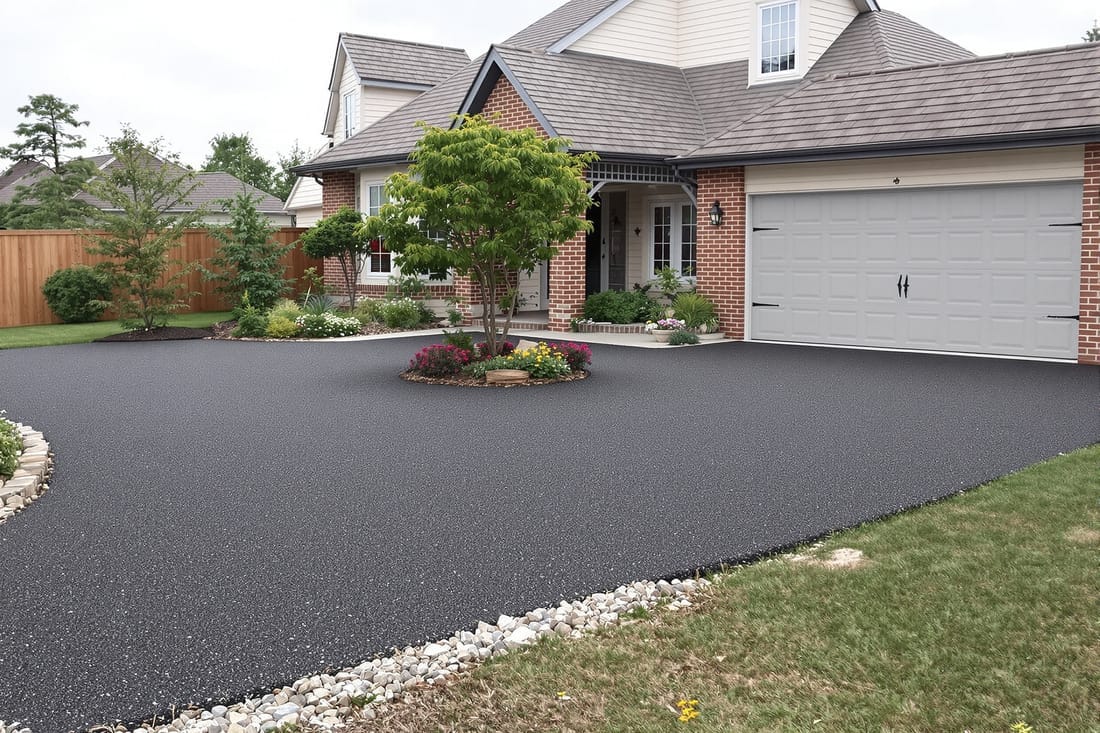
Transform your gravel or dirt driveway in Durham, NC with a professional gravel to asphalt conversion. We regrade, compact the base, and pave with quality asphalt for a clean, low maintenance surface. Say goodbye to constant ruts, dust, and mud. Our team handles drainage and edges so your new driveway performs in every season.
Precision Asphalt Durham provides professional gravel to asphalt driveway throughout Durham, NC, North Carolina and the surrounding area. Our licensed, insured crew delivers safe, clean, on-time work with a free estimate before anything begins. Call (984) 206-3947 or request your free quote.
Turn Your Gravel Driveway Into a Solid Asphalt Surface
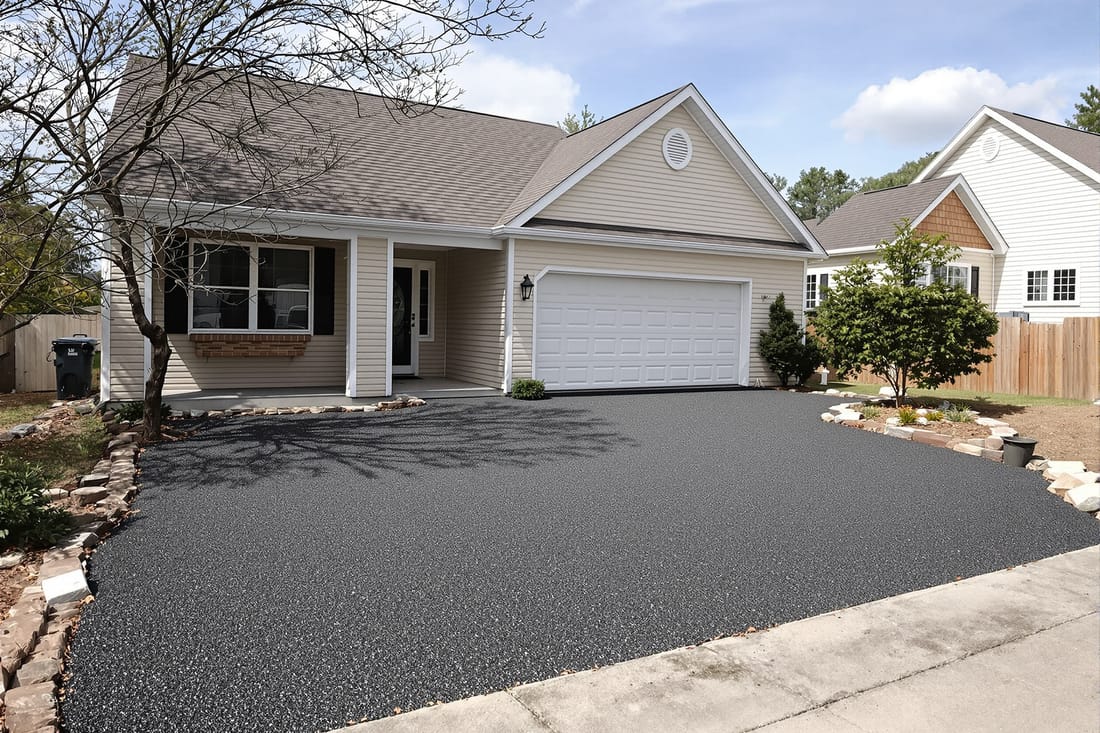
If you are tired of ruts, washouts, and dust from a gravel driveway, a gravel to asphalt driveway conversion is usually the most direct fix. At Precision Asphalt Durham, we focus on taking existing gravel drives around Durham and turning them into smooth, properly drained asphalt that holds up to local traffic and weather.
Most gravel driveways in Durham were never engineered as permanent surfaces. They often follow the natural slope of the yard, which leads to water cutting channels through the gravel and pooling near garages or carports. Before we talk about blacktop thickness or finishes, we look at how water moves across your property and how heavy your use actually is. A narrow gravel drive in an older Trinity Park home, for example, has very different needs than a long shared drive off Guess Road or a sloped driveway in north Durham clay soils.
A good gravel to asphalt driveway is not just asphalt dumped on top of rock. It relies on the right base depth, compaction, drainage design, and edge support. Our crews are used to dealing with the red clay and mixed fill you find around Durham, including older homes from the 1950s to 1990s where the original builder did minimal driveway prep. We build the structure underneath so you do not end up with cracks and potholes in a couple of seasons.
Site Evaluation and Planning for Durham Properties
Every conversion job at Precision Asphalt Durham starts with a site visit, not an estimate over the phone. Gravel driveways around Durham vary from short level runs off city streets to long slopes off rural Orange County roads that still use a Durham mailing address. The ground conditions and layout directly affect how we plan your project and what it will cost.
During the evaluation, we look at:
• Existing gravel depth and condition. Some drives have 6 inches or more of compacted stone, which is a good starting base. Others have a thin layer of stone over mud. Thin or contaminated gravel often needs to be removed or supplemented so the asphalt has a solid foundation.
• Subgrade soil type. Much of Durham has dense red clay that holds water. In low spots or shaded areas, that clay can stay soft after rains. Where we see that, we may recommend undercutting (removing a few extra inches of soft soil) and replacing it with compacted stone.
• Drainage paths. We check where water currently flows, where it pools, and where it exits your property. If water is running down the driveway, we may propose a slight crown in the asphalt surface, shallow swales along the edges, or a catch basin at the bottom of the slope.
• Access and tie in points. For townhomes or houses close to the street, we pay special attention to how the new asphalt will tie into city curb or existing sidewalk so you do not get a bump. For rural drives, we look at transitions to the road shoulder and any existing culverts.
We then talk through possible layouts, such as widening tight turns, adding a parking pad near the garage, or creating a more defined turn around, especially common for homes off narrow roads like Rougemont or Bahama areas. This planning step keeps surprises and change orders to a minimum once work starts.
How Precision Asphalt Durham Converts Gravel to Asphalt
The actual conversion process has several stages, and each one affects how long your driveway will last.
1. Strip, shape, and repair the base
If your existing gravel is deep, relatively clean, and not full of mud, we can usually regrade and reuse it. Our crew uses a skid steer and motorized grader to cut high spots, fill low spots, and create the correct slope or crown. Where we encounter soft pockets, we dig those out, sometimes 6 to 12 inches, and backfill with compactable stone.
If your driveway has been patched with mixed materials like bricks, scrap concrete, or fines, we may need to remove those sections entirely before rebuilding the base. Leaving junk material is a common cause of early asphalt failures.
2. Add and compact stone where needed
Once shaped, we add crushed stone as needed. Most residential gravel to asphalt driveways around Durham use a base layer of ABC stone (a crushed stone mix) compacted in one or more lifts. We use vibratory rollers to compact until the stone is firm and does not rut under the roller. For heavier use drives, such as small businesses or shared private roads, we may increase the base thickness.
3. Address drainage features
Before asphalt arrives, we install any drainage improvements that were planned. This can include grading shallow ditches along the sides, cutting relief swales, or setting a small catch basin and pipe to move water away from garages or basements. Addressing drainage at this stage is much easier than trying to correct it after paving.
4. Install the asphalt layers
For most gravel to asphalt driveway conversions in Durham, we recommend a 2 course system: a base course of asphalt for strength, then a finer surface course for smoothness and appearance. Typical total thickness runs from 2.5 to 4 inches depending on traffic and budget. Asphalt is delivered by truck, placed with a paver for consistent thickness, then compacted with steel drum rollers. Hand work is done along edges, at garage floors, and around steps or walkways.
5. Final compaction and cleanup
Once compacted, we check for low spots, correct any visible seams, and tighten up the edges. We broom off loose material, haul away any excess gravel or debris, and leave you with a driveway ready for light use in about 24 hours for cars, longer for heavy trucks as advised.
Design Options and Cost Factors for Your Gravel to Asphalt Driveway
Not every gravel to asphalt driveway needs the same design. During planning, Precision Asphalt Durham lays out options so you understand what you are paying for.
Common design choices include:
• Thickness and number of layers. A short, level residential drive used by passenger vehicles might do fine with a single thicker surface course. A longer drive with delivery trucks or work vans often benefits from a separate base and surface course. Thicker sections cost more upfront but reduce the risk of rutting and structural cracking.
• Width and layout. Many older gravel drives around Durham were built too narrow for today’s vehicles. When converting to asphalt, it usually makes sense to widen the drive to at least 9 to 10 feet in tight areas and more where people park side by side. Curves can sometimes be relaxed so trailers or delivery trucks do not break edges.
• Edging and transitions. We can leave a simple compacted shoulder of gravel beside the new asphalt, or you may choose concrete or stone edging for a more defined look and better edge support. We also adjust the asphalt height to match garage slabs, patios, or sidewalks to avoid trip points.
• Finish appearance. Residential drives typically get a fine surface mix for a smoother, tighter finish. For long rural drives that see utility trucks or farm equipment, a slightly coarser surface may offer better grip.
Cost is driven mainly by four items: amount of base repair or replacement needed, total asphalt thickness, square footage of the driveway and any new parking areas, and drainage work such as pipe or basin installation. In Durham, a conversion where the gravel base is in good shape and drainage is straightforward will cost significantly less than a drive that needs deep undercutting and multiple drainage fixes.
We provide written estimates that break these pieces out so you can see what affects the price and where there is room to adjust scope to meet your budget.
Local Issues, Common Problems, and How We Prevent Them
Durham has some specific conditions that affect gravel to asphalt driveway conversions, and ignoring them usually shows up as problems a year or two after paving.
One recurring issue is soft subgrade in shaded or low areas. In neighborhoods with mature trees like Forest Hills or Hope Valley, overhanging canopy keeps parts of the driveway damp for long periods. If those areas are not undercut and rebuilt with stone, the asphalt above can sink or crack. Precision Asphalt Durham probes and tests these spots and recommends undercutting where needed instead of relying on thin gravel over mud.
Another concern is water that currently runs down the driveway toward the house. We see this often on sloped drives leading into basements or garage doors on split level homes built in the 1960s and 1970s. Paving without changing grades can make the problem worse because water flows more freely on asphalt. In those cases we adjust the grade, add a very slight cross slope where possible, and may recommend trench drains or catch basins at the bottom to protect the structure.
Edge failures are also common on older converted drives where the asphalt was laid too thin over loose gravel. Heavy wheels near the edge cause cracking and crumble. We combat this by tying the asphalt into a properly compacted shoulder of stone and keeping full thickness to the edge. On drives that see box trucks or trailers, we may suggest additional width or structural support at the edges.
Tree roots can be a problem along drives lined with older oaks or pines. While we cannot control future root growth, we can remove existing surface roots during base prep so the new asphalt starts on a uniform foundation. We also avoid cutting grades so close to tree trunks that we risk destabilizing the tree.
By addressing these Durham specific issues up front, we aim to get you a driveway that still looks and performs well long after the first couple of winters and summer heat cycles.
What to Expect, Timing, and How to Get a Quote
A typical gravel to asphalt driveway conversion around Durham usually takes 1 to 3 working days once we start, depending on length, base repairs, and weather. Long shared drives or those needing significant drainage work can take a bit longer, but we schedule and communicate clearly so you know when access will be limited.
Before work starts, we ask you to move vehicles out of the work zone and identify any underground items like sprinkler lines, shallow wires, or invisible dog fences so we can avoid them during grading. If permits or inspections are required for drainage structures that connect to city storm systems, we review that with you during the estimate.
During construction, there will be noise from equipment and trucks moving in and out. Access to your garage or carport may be limited while base work and paving are underway. For most residential projects, you can usually drive on the new asphalt for light use after 24 hours, although we may recommend waiting 2 to 3 days before allowing heavy vehicles or trailers.
After completion, we provide basic care guidelines, such as avoiding sharp turning of tires while stopped, especially during the first few weeks in hot weather, and keeping heavy equipment off the new surface until it has had time to fully cool and harden. We also discuss optional sealcoating schedules, which typically start 12 to 18 months after installation, not immediately.
To get a quote from Precision Asphalt Durham, we schedule a site visit, evaluate your existing gravel driveway, discuss how you use it, and then provide a written proposal that outlines base work, asphalt thickness, drainage items, and total cost. That way, you know exactly what is involved in turning your gravel to asphalt driveway into a long lasting surface that fits how you live and work on your property.