Home › Private Road and Lane Paving
Precision Asphalt Durham delivers private road paving in Durham, NC for shared driveways, subdivision lanes, and rural access roads. We design pavement thickness and base to handle local traffic loads, then install asphalt that sheds water and resists rutting. From long country lanes to short shared drives, we improve safety, comfort, and property value along your private roadway.
Precision Asphalt Durham provides professional private road paving throughout Durham, NC, North Carolina and the surrounding area. Our licensed, insured crew delivers safe, clean, on-time work with a free estimate before anything begins. Call (984) 206-3947 or request your free quote.
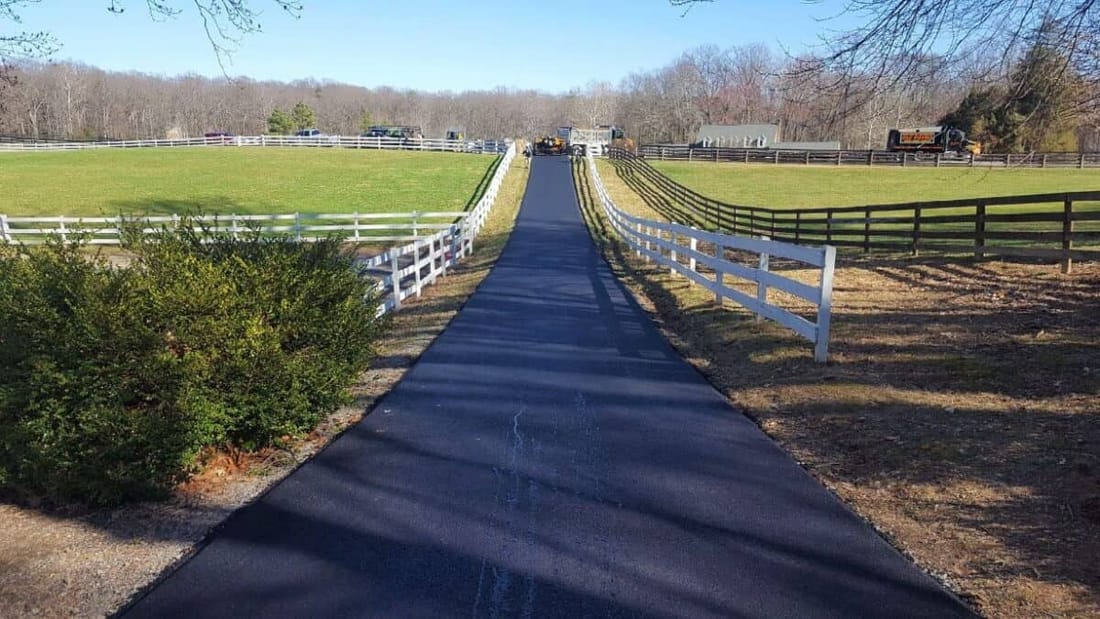
Private Road Paving for Homes, Farms, and Small Communities
If you share a long driveway, live in a private subdivision, manage a farm, or own land off a county road, a well built private road is often more important than your street address. Precision Asphalt Durham focuses on private road paving that fits how people actually use their property in Durham and the surrounding Triangle, not just what looks good in a photo.
We handle short lanes that serve one or two homes, longer shared roads that run a quarter mile or more, and loop roads inside private neighborhoods or small commercial sites. Around Durham, we often see older gravel lanes that wash out in heavy rain, or patchwork asphalt that was put down too thin years ago. Our goal is to turn those rough stretches into solid, predictable access that stands up to daily traffic, delivery trucks, trash trucks, and the occasional concrete or propane truck.
From your first call, we start with how you actually use the road. Do school buses come down it, or just passenger vehicles. Is there a steep section where you spin during wet weather. Do you have drainage ditches you want to keep, or a grassy shoulder you want to protect. Those details shape everything from the base depth to the asphalt mix, so the road works for your property instead of fighting it.
How We Design and Build a Private Asphalt Road
Private road paving is more than just spreading asphalt. Precision Asphalt Durham follows a step by step process so the road stays solid through Durham heat, storms, and freeze thaw cycles.
1) Site visit and layout: We walk the full length of the road with you, mark the edges, check slopes, and note soft spots. In rural parts of Durham County we often carry a probe rod to check how deep the topsoil and any clay pockets go. We also look at how water currently flows across and along the lane so we do not create new washout points.
2) Grading and base prep: Good base work is where most private roads fail, so we do not skip it. For new roads we strip off soft topsoil, shape the subgrade, and compact it with a vibratory roller. Then we typically install a stone base of ABC (crushed granite with fines) in one or two lifts, each compacted. For soft or wet areas near creeks or in low spots, we may recommend a geotextile fabric under the stone to keep the base from pumping and rutting.
3) Drainage planning: Durham sees heavy thunderstorms and occasional tropical systems, so we pay close attention to drainage. We use a slight crown or a consistent cross slope so water sheds off the pavement. Where needed, we cut shallow ditches, clean existing swales, or add small culverts at low crossings. The idea is to guide water away from the road so it does not sit and break down the asphalt or base.
4) Asphalt paving: For most private roads, we use a compacted asphalt thickness of 2.5 to 3 inches, placed as either a single lift or two lifts depending on traffic and budget. Light residential roads may use an intermediate or surface mix designed for drive lanes, while roads that see heavy trucks may get a stronger base mix on the bottom and a tighter surface mix on top. We pave with a screed paver where the layout allows, which gives a more uniform surface than skid steer spread only.
5) Compaction and finishing: After laying the asphalt, we compact with a steel drum roller, and in some cases a pneumatic roller, to lock the aggregates together. We hand tamp edges and around utility boxes or gates. When needed, we feather tie ins into existing driveways or public roads so there is no abrupt bump at the connection.
6) Striping and signage (if requested): On shared roads or small communities, we can add a centerline, stop bars, or speed humps with markings. We can also install simple private road or speed limit signs if you want a more controlled feel for the lane.
Common Problems With Private Roads in Durham and How We Fix Them
In and around Durham, we see the same types of private road and lane problems over and over. Knowing what causes them helps you decide what kind of fix you really need.
Ruts and potholes in the wheel paths: This is usually a base problem, not just a surface issue. The original builder may have laid 1 to 2 inches of asphalt directly on clay or on a thin layer of stone. When heavier vehicles pass, the base flexes and the surface cracks. We typically mill or cut out the damaged sections, rebuild the base with proper stone depth, then patch with hot mix asphalt. If large sections are failing or the road was never built right, we may recommend reclaiming or removing the entire surface and rebuilding from the ground up.
Standing water and muddy shoulders: Flat areas near creeks or bottoms in Durham often hold water. Even a well built asphalt road will fail early if water stands along the edges. Our fix might include regrading ditches, cutting relief swales, or adding driveway pipes where private driveways intersect the main lane. Sometimes we also raise the road profile slightly with additional base stone before repaving so gravity works for you instead of against you.
Edge breakage and crumbling sides: Narrow lanes that carry wide trucks often start to break down at the edges. If we see this pattern, we may recommend widening the paved width or strengthening the shoulder with extra stone. For some customers, we install a stone shoulder that is compacted and pitched away from the road, which gives truck tires some support if they track slightly off the asphalt.
Dusty or washed out gravel: Many rural homeowners start with gravel to save money, then get tired of constant grading, dust, and ruts. Sometimes we can stabilize the existing gravel with additional stone and compaction, then pave directly on top. Other times, especially where the gravel is mixed with a lot of mud or organic material, we will strip, rebase, and then pave so you are not trapping soft spots under a new surface.
Cost Factors and Options for Private Road Paving
The cost of private road paving in Durham varies quite a bit because no two properties drain or carry traffic the same way. Precision Asphalt Durham is upfront about what actually drives the price so you can adjust the design to match your budget and needs.
Length and width: Asphalt is priced by area, so the longer and wider the road, the higher the material and labor cost. For shared private roads, we often help HOAs or groups of neighbors run different width options so they can choose between a basic single lane width or a more comfortable passing width in key sections.
Base conditions: If the existing lane has a deep, well compacted stone base, we may only need to fine grade and pave, which keeps cost down. If the road is mostly dirt, thin gravel, or heavy clay, we must invest more in stone, fabric, and compaction. You pay for that work up front, but it is usually cheaper than repeated patching or full replacement a few years later.
Asphalt thickness and mix: Thicker asphalt and stronger mixes cost more but may be required where garbage trucks, oil trucks, or farm equipment regularly travel. On light use home lanes, we can sometimes save money by using a single thicker surface course instead of a two lift system, as long as the base is solid.
Drainage improvements: Culverts, ditching, and swale work add to the project total but are important where water is a problem. During our estimate, we point out which drainage items are must do and which are nice to have so you can prioritize.
Access and logistics: Tight wooded drives, steep hills, or roads that require small loads can slightly raise cost because trucks and pavers cannot work as efficiently. Around Durham we also plan around school bus times and commuter hours so we minimize disruption to residents.
We provide written proposals that break out major items such as base work, asphalt paving, and any drainage structures. If you need to phase the work, for example, pave the worst half this year and the rest later, we can often structure the project to make that realistic.
What Durham Property Owners Should Know Before Hiring a Paving Contractor
Before you commit to private road paving, it helps to ask the right questions and understand the tradeoffs. Precision Asphalt Durham encourages property owners to look past the lowest number on the page.
Check base and thickness details: Any quote for private road paving should clearly state the type and depth of stone base, whether fabric is included where soils are soft, and the compacted thickness of asphalt. Vague wording like thin overlay or standard thickness is a red flag on a road that needs to last.
Ask about drainage and slope: In our area, with red clay and strong storms, drainage is not optional. Make sure your contractor explains how water will leave the pavement, where ditches or swales will go, and what happens in the heaviest rain. Road layout should use a modest crown or cross slope, not be perfectly flat.
Confirm equipment and compaction: A private road deserves more than a small walk behind roller. Ask what size rollers and what type of paver will be on site. Proper compaction is what turns loose materials into a road that feels solid instead of squishy under heavy loads.
Discuss access during construction: On shared roads, we usually phase work so residents can get in and out, with short closures while asphalt is actually being laid and compacted. We go over this plan in advance so no one is surprised and emergency access is maintained.
Plan for maintenance: Asphalt lasts longer with basic care. We advise most private road owners to consider crack filling and sealcoating after a few years, especially if they have lots of sun exposure. We also recommend simple steps like keeping edges clear of deep rooted brush and cleaning out ditches once or twice a year so water can keep flowing.
When you call Precision Asphalt Durham, we walk the road with you, talk through these points in plain language, and help you choose a level of construction that fits how you use the property and how long you need the road to last.